Every check engine light looks the same at first glance: an amber engine outline glowing on the dash. But the light has two behaviors, and they mean very different things. A steady light is the car asking for attention soon. A flashing light is the car asking you to slow down and stop driving it hard, right now. Knowing which one you have turns a moment of dashboard dread into a simple decision.
This guide lays out that decision for Kings Mountain drivers: what each behavior means, which causes sit behind each, and how far it is reasonable to drive before the car needs a scanner.
The one distinction that matters
A steady check engine light means the car's computer has detected a fault and stored a code. Emissions faults, sensor readings out of range, and small evaporative leaks all live here. The car usually drives normally, and the fault is a schedule-it-this-week problem, not a pull-over-now problem.
A flashing, or blinking, check engine light means an active severe misfire. Unburned fuel is passing through the engine into the exhaust, where it can overheat and damage the catalytic converter in a short distance. That damage is the expensive part, and it happens fast, sometimes within minutes of hard driving. Flashing means reduce speed and load, avoid hills and highway speeds, and get the car scanned promptly. If the flashing comes with shaking, power loss, or a temperature gauge climbing, stop somewhere safe and arrange a tow.
| Situation | What it usually means | Driving decision |
|---|---|---|
| Steady light, car feels normal | Stored fault: sensor, emissions, or evaporative issue | Drive normally, book diagnostics within days |
| Steady light after filling up | Loose or failing gas cap is a common cause | Tighten the cap, drive a few trips, rescan if it stays |
| Flashing light | Active severe misfire | Slow down, avoid load, head for diagnosis or stop |
| Flashing light plus shaking or power loss | Misfire affecting drivability | Pull over safely and arrange a tow |
| Light plus red oil or temperature warning | Possible engine damage in progress | Stop the engine as soon as it is safe |
| Light comes and goes for weeks | Intermittent fault, often heat or load related | Book diagnostics and note when it appears |
Common causes behind a steady light
The frequent offenders are unglamorous. A loose gas cap tops the list because the fuel system pressure-tests itself and a poor seal reads as a leak. Oxygen sensors age and report slowly. Mass airflow sensors get dirty. Spark plugs and ignition coils wear out, which can start as a stored code before it becomes a felt misfire. Evaporative system leaks, a sticking purge valve, and a thermostat that lets the engine run too cool round out the regulars. None of these announce themselves reliably by feel, which is why the stored code matters more than guesses.
What a real diagnosis looks like
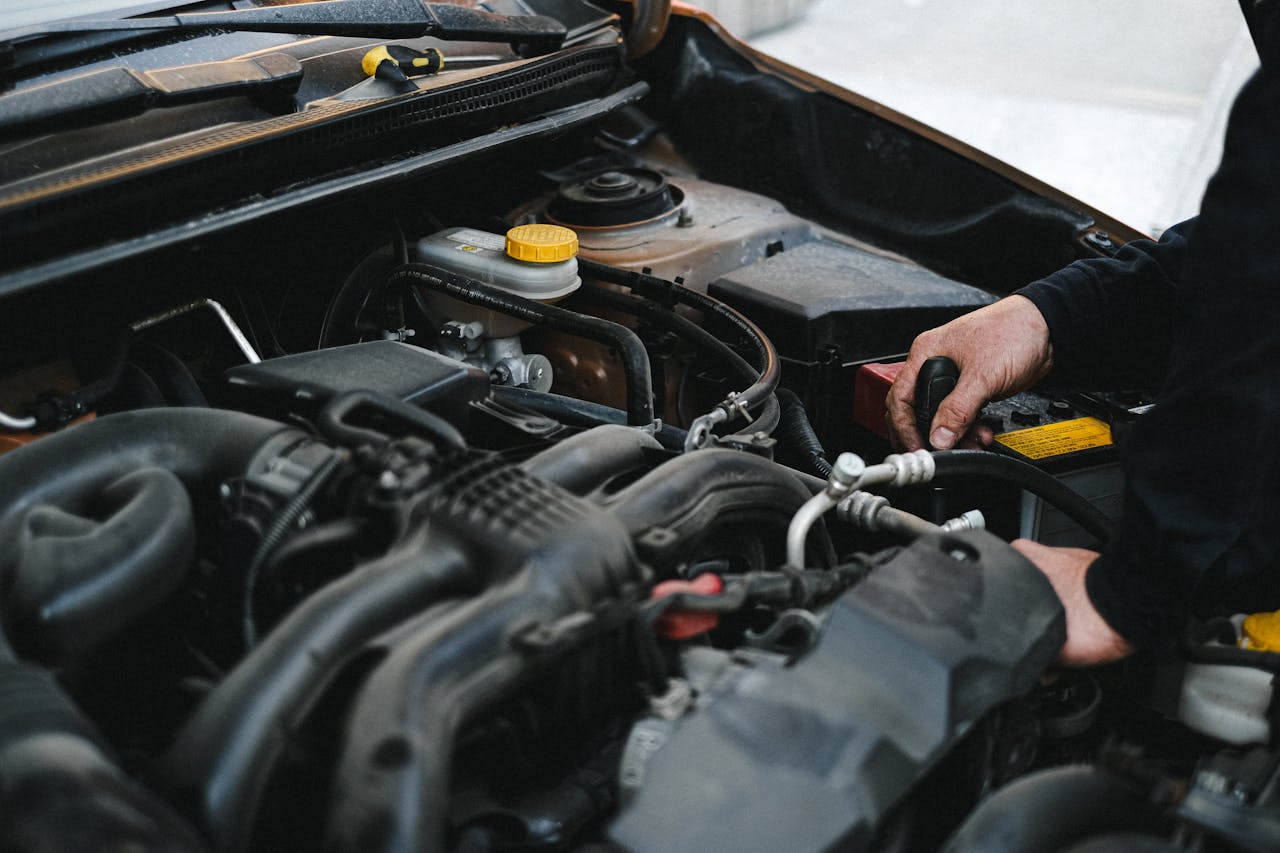
A code is a starting point, not an answer. The same code can come from a failed part, a broken wire, a vacuum leak, or a software quirk, and swapping the part named by the code without testing is how money gets spent twice. Proper engine diagnostics, the kind done at Baity's Automotive Services, read the code and the live data around it, test the suspect circuit or component, and confirm the cause before quoting a repair. When a shop gives you the code numbers and explains what they tested, that is the work you are paying for.
Clearing the code without fixing the cause accomplishes one thing: it turns the light off until the car's self-test runs again, usually within a few drive cycles. It also erases the stored data a technician could have used, so resist the urge to clear and hope.

How long can you wait on a steady light?
Days, not months. A steady light can hide a fault that quietly costs fuel mileage, and some faults graduate: a small misfire ignored becomes the flashing light, and a rich-running engine loads its catalytic converter with fuel it was never meant to burn. There is also a practical deadline in North Carolina, because a car with an active check engine light will not pass its emissions inspection in counties that require one. Book the scan while the car still drives well and the problem is still small. That timing is the whole difference between the two versions of this light.
Common questions
Can I drive with a flashing check engine light?
Only gently and briefly, to reach help. Reduce speed and load immediately, because an active misfire can overheat the catalytic converter quickly. If the car shakes or loses power, stop and arrange a tow instead.
Will tightening the gas cap turn the light off?
If the cap was the cause, yes, but not instantly. The car needs several normal drive trips to rerun its self-test and clear the code on its own, so give it a few days before assuming a bigger fault.
Does the light mean the same thing on every car?
The steady versus flashing distinction is consistent across modern cars, and flashing always signals a severe misfire. The specific causes behind a steady light vary, which is what the stored code and testing sort out.
Photos in this guide are representative stock images.
← All guides from Baity's Automotive Services← Back to Baity's Automotive Services