A mobile mechanic works in your driveway. A shop works under a lift, with a full tool wall, diagnostic equipment, and the ability to keep your car for two days if a part fights back. Both are legitimate ways to get a car fixed around Kings Mountain, and the honest question is not which one is better. It is which one fits the job in front of you.
Choosing wrong usually costs time rather than money. A mobile mechanic who arrives for a job that needs a lift will have to stop and refer you onward. A shop visit for a dead battery means a tow you may not have needed. The table below sorts common work by where it genuinely belongs.
What a driveway handles well
Mobile work shines on jobs that are self-contained, need no lift, and use parts that fit in a van. Batteries, starters and alternators on many models, brake pads on accessible designs, spark plugs, belts, hoses, and basic diagnostics with a portable scanner all fit that description. You also skip the tow if the car will not start at home, which is often the whole point. The limit is what the mechanic can carry and what the weather and light allow. A repair that runs into a rusted, seized fastener in your driveway has fewer rescue options than the same fight inside a shop.
What a shop is built for
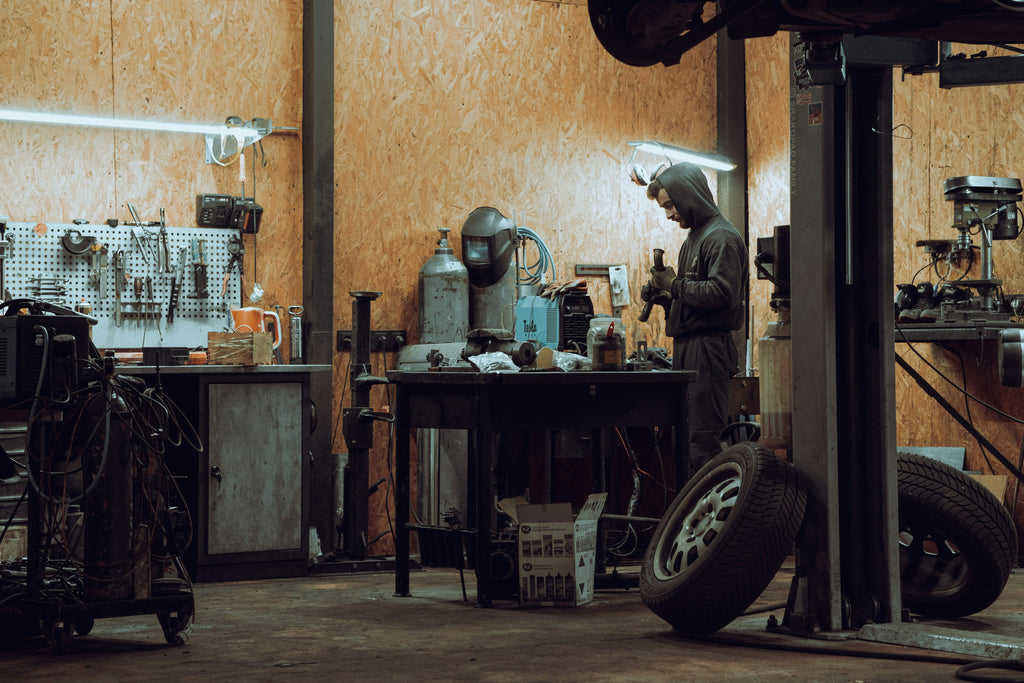
A lift changes everything. Transmission work, exhaust systems, suspension and steering repairs, engine work, and anything requiring the car to be safely overhead belong in a bay. Shops also carry alignment racks, tire machines, fluid exchange equipment, and manufacturer-level diagnostic tools that do not travel. At Baity's Automotive Services, jobs like engine diagnostics and transmission service sit squarely in that category. A shop also gives you a controlled environment: no rain delays, good light, and a second technician when a job needs two sets of hands.
| Job | Mobile mechanic | Shop |
|---|---|---|
| Battery test and replacement | Good fit, no tow needed | Good fit |
| Starter or alternator | Often a fit, model dependent | Good fit |
| Brake pads and rotors | Often a fit on level ground | Good fit, lift speeds it |
| Check engine light scan | Basic codes, yes | Full diagnostics and repair |
| Transmission service or repair | Generally no | The right setting |
| Wheel alignment | No, needs a rack | The only setting |
| Tire mounting and balancing | Rarely, needs machines | The right setting |
| Engine internal work | No | The right setting |
| Air conditioning repair | Simple checks only | Recovery equipment required |
The questions that decide it
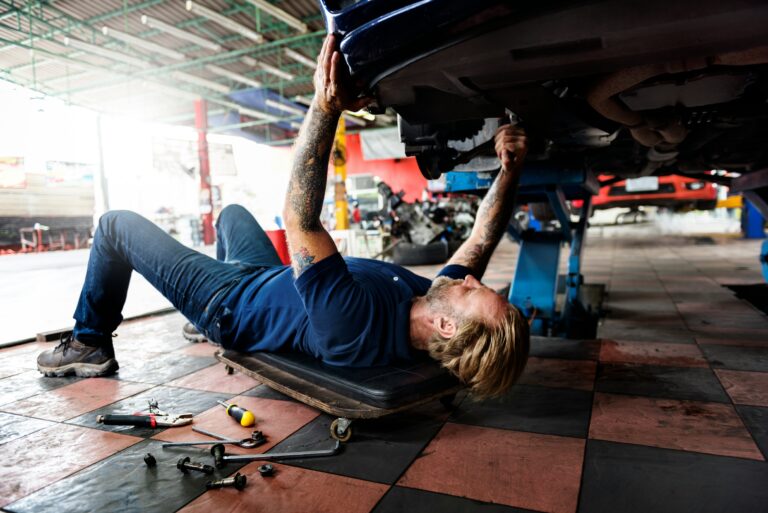
Ask four things before you book either option. First, does the job need the car in the air? If yes, it is shop work. Second, does it need a machine that stays bolted to a floor, like an alignment rack or tire balancer? Shop again. Third, is the car driveable? A no-start at home is the strongest case for a mobile visit, since it can save a tow. Fourth, what happens if the repair uncovers a second problem? A shop can pivot to the extra work with the car already on the lift. A mobile mechanic may need to close the car back up and return another day.
Warranty, parts, and paperwork
Ask both options the same practical questions. Who supplies the parts, and what warranty covers parts and labor if the repair fails in three months? How is the estimate approved if the job grows? A shop with a service counter tends to have these answers written down. A good mobile mechanic will too, and the ones who do are easy to spot: they quote in writing, name the parts brand, and explain what they cannot do before they start, not after. Insurance and licensing matter for both. Anyone working on your car should be able to say plainly how they are covered.
A fair way to use both
Many Kings Mountain drivers end up using each where it is strongest: mobile help for a battery or a no-start in the driveway, a shop for tires, alignments, transmission work, and anything diagnostic that runs deep. That is not disloyalty to either. It is matching the tool to the job, which is what both a good mobile mechanic and a good shop will tell you themselves.
Common questions
Is a mobile mechanic cheaper?
Often for small jobs, because you skip the tow and the shop overhead, but not always. Get the quote in writing from either option and compare the parts and warranty included, not just the headline number.
Can a mobile mechanic do brakes?
Usually yes for pads and rotors on a level surface. Work involving brake lines, seized hardware, or a full system flush is better handled in a shop with a lift and fluid equipment.
What if the mobile mechanic finds a bigger problem?
Expect a referral to a shop for lift or machine work. A trustworthy mechanic will stabilize the car, explain what they found, and hand you their notes so the shop does not start from zero.
Photos in this guide are representative stock images.
← All guides from Baity's Automotive Services← Back to Baity's Automotive Services